
Rally history has many heroes, but some left a deeper mark than others. The 1970s and ’80s were the golden era when many of these legendary stories took shape.
Lancia, Peugeot, and Audi: ask any true enthusiast, and these three names will likely come up first. Each has solid reasons to claim the top spot in the hearts and dreams of rally fans worldwide.
Audi earned its place in rally history by pioneering all-wheel drive, an innovation that changed the game. From 1982 to 1984, Audi dominated both Drivers’ and Constructors’ championships, thanks to the blistering pace of the legendary Audi Quattro and its successor, the Sport Quattro.
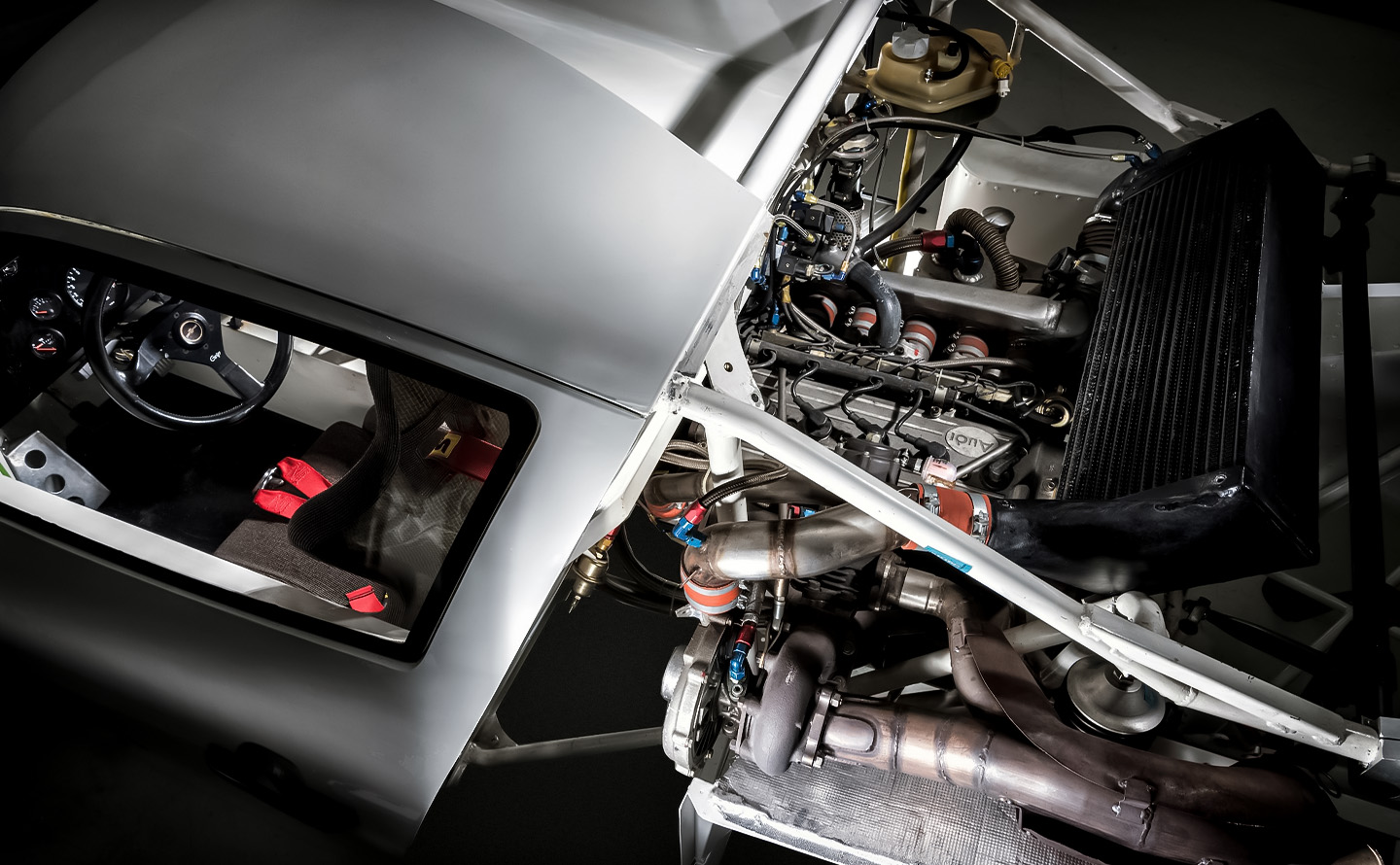
But when Group B evolved into a brutal battlefield of mid-engine monsters, Audi’s front-heavy layout showed its limits. The iconic five-cylinder engine, mounted well ahead of the front axle, gave the car serious understeer in tight corners, enough to cost precious time. To keep up with rivals like the Peugeot 205 T16 and Lancia Delta S4, it was clear: the engine had to move back.
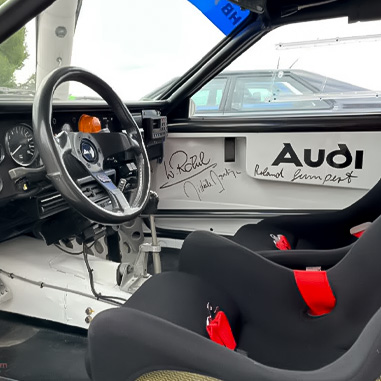
Roland Gumpert, then head of Audi Sport, believed this wholeheartedly. Ferdinand Piëch, Audi’s CEO, didn’t. He argued that a mid-engine design would be too far removed from production cars, which were selling well, and didn’t justify the cost. Despite resistance from both Audi and VW leadership, Gumpert secretly pressed on.
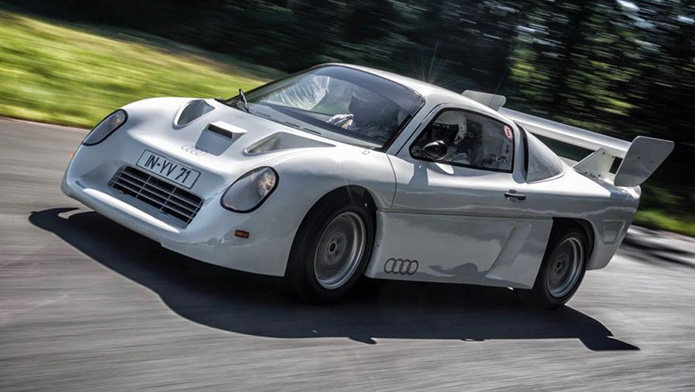
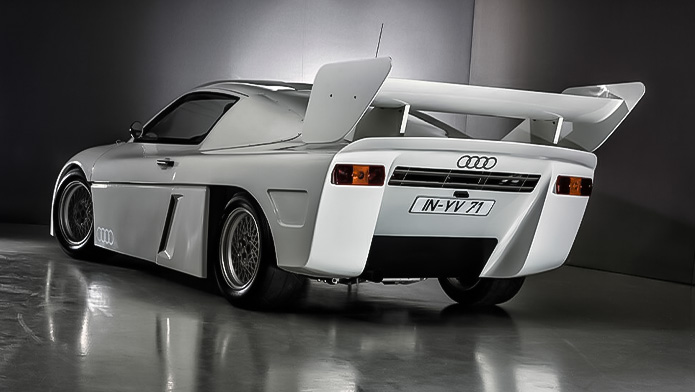
In 1984, three radically different prototypes – coded Sport Quattro S2 – were built and tested, with Walter Röhrl at the wheel. Their striking silhouette didn’t stay secret long. Spy shots made their way to the press, and the project was swiftly shut down by VW brass. Most prototypes were destroyed except one.
That surviving car would resurface when the FIA introduced Group S for 1987, reducing homologation to just 10 race-ready cars. Audi quietly revived its hidden project under the name RS002. It was the wildest of the bunch, equipped with a turbocharged inline-five capable of over 800 hp, Group S-level firepower.
But fate intervened. The tragic deaths of Henri Toivonen and Sergio Cresto in a Delta S4 at the 1986 Tour de Corse, following Attilio Bettega’s fatal crash in 1985, led to the abrupt end of Group B and the cancellation of Group S before it began.
The RS002, like Lancia’s ECV and Peugeot’s Quasar, never raced. Today, Audi’s white rocket lives a quiet retirement at the Audi Museum in Ingolstadt, a monument to one of the most extreme, untamed chapters in motorsport.
Its unmistakable five-cylinder roar still echoes in fans’ memories. In 2017, Audi Tradition fired it up at the Goodwood Festival of Speed, stunning crowds and bringing many to tears. If you haven’t seen the footage, watch it. Just be warned: nostalgia hits hard.